Sunday, August 26, 2018

Just Walking Around


Wheeler the world of books….


For a person like me who is constantly travelling the lengths and breadths of India and sometimes abroad due to my Software Sales profession my constant companion is my travel bag and my Kindle or the Kindle app on my Mobile. It’s the only support in case of delayed flights at the Airport lounges or during the yawning waits at Railway station waiting rooms. It’s the best use of time to catch up on reading through all the chaos swirling around. Instead of getting agitated and all stressed out on the delays. I always keep a book handy in my hand baggage or the Laptop bag-pack as means to de-stress.

Thumbing through the pages of the latest paperback take my mind away from the urge of constantly being connected over Whatsapp, Facebook or Instagram . And the best thing is you don’t have to feel frustrated over the slow speed of WiFi or mobile data and the constant scare of your mobile battery getting discharged to zero. All you need is well light and a good cozy spot in the lounge or the waiting room and a clear view of the Flight Status display or the Train arrival rolling display to take the right decision to move to the departure area / correct platform to catch the next flight or train to your next destination. The in between time is spent in a mystical word of words enjoying a fast paced action Thriller like “Inferno” or a detective novel like “Murder on the Orient Express” or the action packed mythological thriller like Oath of the Vayuputras or Sita the Warrior Princess. Each one bring joy and containment as you read along. When I am out of stock for the books that I carry or have forgotten to pack a novel the one thing that comes to my rescue are those A.H Wheeler book stalls on the ubiquitous Indian Railway platforms. These small but well stocked stalls are present on almost all the railway platforms across India . You will find them even in the remotes station in India. Manned by a single person dishing out everything from News paper to magazines to year books, Cook books, latest English paperbacks to self help books and books in Hindi and other local regional languages. You will find a Wings of Fire by the late APJ Abdul Kalam sharing space with a  Amish Tripathi’s “:Immortals of Meluha” and jostling for space with a racy Hindi horror book like “Khooni Aatma” or even a coffe table book on the Tastes and Flavours of India.

But did you know how these unique book stalls mushroomed on these lazy Indian Railway platforms. A. H. Wheeler or simply Wheeler, is an entirely Indian owned company. It owns a bookstore chain that was co-founded by Emile Moreau, a French businessman, T. K. Banerjee, an Indianbusinessman and others in Allahabad in 1877, operating from railway stations

A. H. Wheeler borrowed its name from the then-successful London bookstore and its owner, "Arthur Henry Wheelers", who was also a friend of Emile Moreau and helped him financially.


At a time when booksellers every where appear to be threatened lot, the life of Emile Edouard Moreau who set up A H Wheeler & Co, the chain of railway bookstalls that endure to this day ,appears as a fascinating example of a man with interests that spanned continents , and yet about whom there remains much that is mysterious.

In 1877 , when he was a young man of around 20, Moreau set up what would be the 1st of the A H Wheeler bookstalls at the Allahbad Railway Station. The East Indian Railways, which had commenced operations from Calcutta northward in 1854, was then expanding its operations from Allahbad to north India. The line from Allahabad to Jabalpur had already been constructed in 1867 and so far the first time Calcutta & Bombay were connected by rail via these two cities.

Moreau was at that time a young employee of the managing agency Bird & Company in Allahabad. Moreau’s familiarity with the railway station at Allahabad , where he lived , meant that he soon noticed the demand for reading material , especially from the first class passengers. As the story goes when a friend of his , AH Wheeler concluded that he had way too much books in his home library, Moreau decided to sell them from a wooden Almirah at the station.

Encouraged by the response he got , he set up a few others the A H Wheeler & Co (named after his friend) , in Allahabad. In late 1880’s A H Wheeler & Co found fame and controversy in equal measures. Moreau develoed bigger plans and decisded to become a publishing house. The Railways had expanded and Wheeler’s bookstalls a familiar feature at Railway Stations across the United Province ( the erstwhile combined state of Uttar Pradesh & Uttarakhand which included the princely states of Agra and Awadh) , the North Wester Provinces and beyond in the first decade of its existence.

In 1888 still in Allahabad , Moreau made a business proposal to Rudiyard Kipling ( author of Jungle Book ) who was a writer for The Pioneer and also the Civil & Military Gazette or CMG (newspapers published out of the city). Kipling’s 1st novel  a collections of his short stories called The Plain Tales from The Hills, had already been published by the Calcutta –based Thacker and Spinl & co. It was Moreau who offered to publish his stories in book form.

Over next few years several of Kipling’s early novels formed part of Wheeler’s Indian Railways Library Series. The other books beginning with Soldiers Three were “Wee Willie Winkie” , “Under the Deodars”, “The Story of the Gadsby”,In Black & White , The Phantom Rickshaw and the other Eerie Tales , which has the famous story , The Man who would be King. These were sold for a princely sum of One Rupee.

When Rudyard Kipling reached London he found more fame than he had bargained for. Moreau had sent copies of the Indian Railway Library Series publications to the British firm Sampson Low, whose editor Andre Lang saw huge potential in these stories.

Soon the agreement betweek Wheler’s and Kipling was to be reworked all publicationrights Wheeler’s had on Kipling’s work outside India were sold back to him , Wheeler’s continued to retain the Indian rights. In his memoirs, Kipling apparently mentioned his early encounter with Moreau, describing him as someone who “came of an imaginative race , used to taking chances”

Once World War I began , Moreau found himself greatly in demand by the Britis Government , especially by the Ministry of Mutinies under which the Propaganda department functioned.Britain’s war propaganda department was set up only after realization of the efficacy of the German Propaganda department .Moreau’s knowledge & experience of the East made him indispensableand it was Edward E Long the Chief of Eastern Propoganda who collaborated with Wheeler’s to dessminate information during War time.

By June of 1915 the department had distributed 2.5 million books in atleast 17 languages. In particular the Bryce Report written around this time relating to German atrocities on Belgian citizens in late 1914 was translated into 30 languages.

Towards the end of World War I in 1917 A H Wheeler split into 2 distinct branches with Arthur H Wheeler & Co operating in London and A H Wheeler & Co in India. Moreau however had numerous other interest. He travelled widely and servered as Director of Companies with interests in Rubber in Java and oil in Malay States.

Little is known of his family life but he remained devoted to his institute Framlingham College till his death in 1937. He was a generous individual benefactor – instrumental in setting up sports facilities for its students and instituting scholarships that carry his name and are provided to this day.

These A H Wheeler book stalls on India Railway platforms,a legacy inherited from the British Raj but one which keeps the written word alive and kicking in today’s day age of the Digital revolution…


So next time if your train is late and you find yourself waiting in the AC Waiting Rooms leave those power hungry Smart phones. Instead of checking your Facebook, head down the platform to the nearest Wheeler and pick up a paperback and emerse your self in the mesmerising world of words.

Happy Reading…


Saturday, August 11, 2018

Just Walking Around


Exotic Leafy Greens and other veggies


Ask any kid today what veggies they like as toppings in their Pasta - Pizza , they would roll off exotic names like Zucchini , Broccoli , Cherry Tomatoes , Mushrooms ,Bell Peppers Red & Yellow , Ice Lettuce spices like Oregano and Thyme… Even my 5 year old Bhakti tucks into Mushrooms and Zucchini's  with relish. But to me the exotics veggies are those that make me remember my childhood  These veggies had their own unique taste and texure and when made into special curries would be polished off from the dinner plates. As the holy month of Shravan is about to start here’s my ode to some Special and exotics Veggies some known and some uncommon to the general public.

What is the first thing that comes to your mind when you hear Leafy Green Vegetables , the obvious choice would be Palak (Spinach) , Methi (Fenugreek) and Chauli (Amaranth) . Either made into dry vegetables using onion as accompaniment or into curry using coconut and garam masala . These go well with garma garm Bhakri be it Rice or Jowar ones and if its made on woodfired chula the taste is heavenly with its smoky taste. But there’s more to green leafy vegetables than just these Trimutri..

It is a universally acknowledged fact that leafy green vegetables are natures best nutrition supplements. They are packed with iron, calcium , vitamins antioxidants and are vital components of a healthy diet.

Yet apart from these usal ubiquitious suspects few people know about the rich culinary repertoire of local and seasonal edible greens that grow across India. From treating common ailments to adding variety to a simple diet, these indigenious super exotic veggies have been consumed in rural India for centuries.

So if you are looking to infuse some fresh flavours into your regular food here are some leafy greens that you might be walking past at the vegetable marlet without even realizing what you are missing.


Bichu buti or Sisunaak saag or Stinging Nettle is a seasonal plant which grows through out the Himalayan region of India. Once touched this unusual plant can give you an itch and a rashes that last for couple of hours. But once cooked it doesn’t sting the palate. Rich in natural fibres this super nutritious plant has been used as diuretic , laxative and allergy relief remedy. It’s also proven to benefit the skin , bone and urinary health.


Takla also called Cassia Tora is a wild leafy vegetable that makes its way into the local market during monsoons. It is easily available in Mumbai right from the start of the rainy season. This leafy vegetable is favorite among Konkani people. Takle is extremely beneficial for health has great medicinal value and consuming it helps to keep monsoon related ailments at arm length. One of the best recipe for Takla is its Tamboli or a green chutney type dish. Pick only the tender leaves and discard the stems. Rinse them , drain all the water and leave them to dry on a soft muslin cloth. In a frying pan heat clarified butter or ghee , add cumins (jeera) , when they crackle add pepper and green chillies. Add the Takla leaves and saute on low flame till they change colour. Cool the mix and grind into a smooth paste along with fresh coconut salt and tamarind to give it a sweet sour taste. Add more water to give it that Tamboli consistence not too thick nor too thin. A healthy and nutritious Tamboli is ready to be served. Best eated with steamed rice and fried Papad. Taste like heaven . Try it next time you are bored of the usual Kadi-Bhath or the Khichadi.


Another unusal green vegetable is the Ambushi / Ambuti is a local plant with its bright yellow flowers is seen growing on the roadside in rural areas during monsoons. It can be turned into a vegetable dish with minimal spices or a fresh kadhi to tackle indigestion. In Konkan local Ambushi is ground into a paste to treate severe headaches.


Then there is the Mayalu , a creeper which grows in wild in courtyards, pots and gardens all over Maharashtra. The thick soft leaves make a delicious vegetable that can be combined with lentils and in some coastal area even with sea food like shrimps or prawns.Known as Indian Spinach or Malabar nightshade this green veggie is supposed to have a cooling effect on the digestive system.It has a little astringent taste and is effective in tackling arthritis.


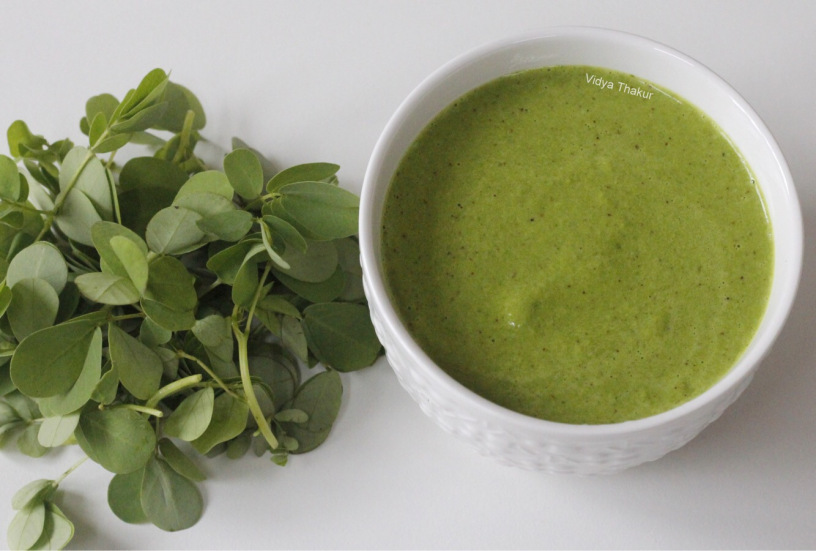
If plants could be superheroes , Moringa ( adapted from Tamil & Malyalam word for drumstick ) would definitely be one of them. Every part of this ubiquitious tree can be consumed – leaves and pods as food the seeds , bark flowers and roots as medicine. This one is also called Saijan Saag or Shevgyacha Paala . The leaves especially are highly nutritious. Can be made into dry vegetable or tasty cutlets / pattice using channa dal and jiggery . Eaten with fresh mint chutney it’s a perfect evening snack during the rainy season.


Ambadi in Marathi , Gongura in Telgu or Pulicha Keerai in Tamil and Pundi in Karnataka is a leafy vegetable with tangy and little sour tasting leaves. This leafy vegetable is used to make tangy mutton and a zesty toor dal or a spicy pickle .


Another uncommon leafy veggie is Kulfa / Ghol or luni saag is highly underrated not just in taste but also in health benefits. In India, physicians have long been recommending it for everything form reducing fever to removing worms and soothing urinary infections. In fact it was a favourite of Mahatma Gandhi who wrote about in his magazine. Modern science too has made it clear why it is of such value , apart from it providing significant amounts of vitamin A, B & C and descent amounts of protein this leafy green probably contains more Omega 3 fatty acids than any other commonly available vegetable source. Interestingly most botanical studies credit India as its country of origin and Euell Gibbons the American expert on foo has even labelled it as Indias gift to the World.


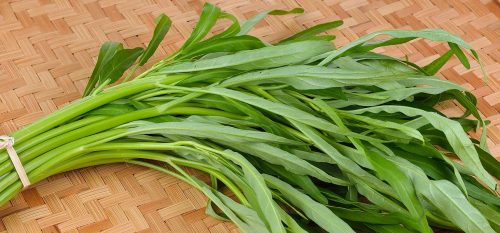
Anne Soppu in Karnataka and Kalmi Saag in West Bengal or Water Spinach as it is known grows wild like a weed along river banks and in paddy fields. Its mild yet distinctly savoury tate combination of long arrow shaped leaves and crunchy hollow stems. In Bengal its stri fried with garlic , green chillie's and gram to make a lip smacking vegetable dish or in Karnataka the same leaves are made into a delicious sweet –sour-spicy chutney with urad dal to give it a binding and rough texture.


And the most famous and recognizable leafy green vegetable during the monsoon is the Alu or Arbi ka patta.The potato resembling roots of Arbi or Colocasia is well known ingredient in most Indian households. But did you know that the jumbo heart –shaped leaves of this herbaceous plant are delicious as well. In fact, several indigenous cuisines across India especially in Bihar , Jharkhand , Bengal , Uttar Pradesh , Uttarakhand and Himachal Pradesh, have traditional dishes prepared with Arbi ka patta also called Saru Saag or Taro leaves. From Gujrati Patra or Maharashtrian Alu Wadi  (a spicy besanmix is slathered over leaves which are then rolled steamed and then deep fried to make perfect crunchy side dish or starter to the thali. In south India these leaves are made into coconut milk based curry with cut leaves or leaves rolled to form Gathi or knots. The culinary variations on this vegetable are manifold thanks to its robust falvour.


Then there is the Chakod , Chakunda or Chakramarda Saag , the cassia tora plant grows wild like weed spreading like lush carpet during the monsoon in the forested areas of Bihar , Jharkhand and Chattisgarh and in the coastal belt of Karnataka and Goa. It is eaten as a vada (lentil Fritters) as a vegetable mix with dried coconut and jackfruit seed (bikna) and as a simple stir fry served with finger-millet bhakri.


Some other exotic vegetables though not leafy greens are again worth their taste in gold. Like the tender bamboo shoots. Monsoon rains bring spikes of tender bamboo shoots. About 3-4 year old bamboos have a new shoot arising from the underneath root-system above the ground. Within a few weeks these bamboo shoots grow a few feet in length above the ground. Tender bamboo shoots within 2-3 feet in length are edible & are eaten as a vegetable.  When a young, cone-shaped new bamboo shoot just appears above the ground surface, it is chopped off from its root attachment, generally using a spade. It is consumed as a delicacy. On its exterior, bamboo shoot has several layers of tough casing of leaves, firmly wrapped around its central cream-white heart which is the edible portion of bamboo shoot. It is crunchy in texture, and has mild yet distinctive flavor. Once boiled and cured, it however, acquires almost a neutral taste.
Fresh bamboo shoots are crunchy, even after cooking. Pickled bamboos get soft with time but still remain chewy. Young, tender shoots are a seasonal delicacy in East Asian regions, & south east asian countries.


In Karnataka, bamboo shoots are used as a special dish during the monsoons (due to seasonal availability). It goes by the name kanile or 'kalale in Kannada. And are known as kirlu in Konkani.
Konkani cuisine includes various delicacies using fresh bamboo shoots. Tender bamboo shoots once are chopped off have a very limited shelf life. They start to go bad within 4-6 days. Hence, they are pickled/cured to be used throughout the year. 

Fresh tender bamboo shoots are available only for the first few months of monsoon every year. And the only way to have ample of them throughout the year is to preserve them by curing/pickling. Season’s glut is thus preserved in brine for years to come.

Fresh bamboo shoots have to be consumed only on cooking or on pickling. You can’t & shouldn’t eat them raw. Raw bamboo shoots contain (cyanogenic glycosides), natural toxins. Cooking, pickling destroys these toxins.
Even before you cook fresh bamboos you have to keep pieces of bamboo shoots soaked in water for two to three days, where the water is drained and replenished with fresh water each day to extricate and remove toxins. 

Bamboo shoots are edible when they’re young. They harden as they mature. Tender bamboo shoots are commonly sold in the local markets during the months of June to September when young bamboo shoots sprout.

Tender bamboo shoots that are collected, are defoliated, soaked in water for 2-3 days, then are boiled in water to remove its bitter taste after which it is ready for consumption, to go into a dish. The water used to cook fresh bamboo is discarded as it tastes bitter & unpleasant. These tender fresh bamboo shoots are then used in cooking.

These fresh tender bamboo shoot pieces are then used to make various dishes like:

1. Keerla sukke/chakko (bamboo shoots in a spicy coconut masala), 
2. Keerla ambade ghashi (a coconut based curry with bamboos and hog plums),
3. kirla ghashi with mugu (bamboos in a spicy coconut curry with green gram).
Konkani cuisine has it's set of tender bamboo shoot delicacies.

Pickled tender bamboo shoots are used to prepare

1. kirla bajo (bamboo fritters)
2. kirla sanna polo (spicy rice based pancakes with bamboo shoots), 
3. keerla fry (shallow fried pickled bamboos), 
4. keerla phodi (spicy pan fried bamboos),
5. suyee ghashi (coconut based curry) from the pickled bamboo shoots.

Some people who taste fresh, cooked bamboo shoots for the first time may feel an unpleasant taste/smell. But proper cooking removes the unpleasant taste & smell.

So next time you go to your local vegetable market , during the monsoon season pick up these seasonal vegetable till the rains last. If you manage to get them do not skip trying these truly exotic Indian vegetables as they are not only good for health but even great to taste…

Friday, July 27, 2018

Just Walking Around


The Sindhi's... And Sindhu food, my take...

A few months ago read an article about an overzealous Member of Parliament stating that Government should strike off the word Sindhi from a verse in our National Anthem... as it's now part of our neighboring country and promoter of state sponsored terrorism Pakistan... But the same was condemned by our honorable Supreme Court by stating that the sentiments of unity and cross cultural ethos stated through the verse penned by Rabidrnath Tagore should not be confined to geographical boundaries..

As matter of fact people of India should be made aware and be inspired by a community which faced uprooting, atrocities, emotional and financial loss during the worst ever event in India's history.. The Partition.

A lot has been written and documented on the vagaries and devastation faced by Muslims or the Sikhs during the partition. Even leading film maker and Sindhi Govind Nehlani brought to life the horrendous devastation on the Punjabi and Sikhs in particular in his adaptation of the Hindu novel Tamas.. A tele serial was made with stalwarts like Om Puri on the lines of todays Netflix exclusive. It was well received and even won laurels at foreign film Festival and special awards from the President ofIndia

But if look at History the Sikhs who came over to India at least had Punjab to call their own.. But the Sindhi's, they literally became people with no motherland to call their own. Most of those who decided to flee the newly declared Islamic Republic had only one hope in their hearts, that India with its secular and accommodative culture is where they will prosper and flourish. With a prayer on their lips and hope in their hearts hordes of Sindhi crossed over and accepted the heart wrenching tag of Refugee... A large number of Sindhi's faced large scale violence and atrocities but they were resilient enough to withstand this onslaught and loss to restart and resurrect like the Mythical Phoenix that rises from its ashes... And ashes it was as the Sindhi's were mostly a trading and business community hated by the zealotsin Pakistan..

If you go back in time you can understand where this resilience comes from. It comes from the inner unity among the community members and their thirst for education and love for intellect.
For several centuries in the first millennium B.C. and in the first five centuries of the first millennium A.D., western portions of Sindh, the regions on the western flank of the Indus river, were intermittently under Persian, Greek, and Kushan rule, first during the Achaemenid dynasty (500–300BC). 

The original inhabitants of ancient Sindh were believed to be aboriginal tribes speaking languages of the Indus Valley Civilisation around 3300 BC. Moen-jo-Daro was one of the largest settlements of the IndusValleyCivilisation.


The region received its name, Sindh, from the River Sindhu (Indus). The people living in the region are referred to as Sindhi. The terms Hindi and Hindu are derived from the word Sindh and Sindhu, as the ancient Persians pronounced "s" as "h" (e.g., sarasvati as harahvati). In the same way, Persians called the people of this region as Hindhi people, their language as Hindhi language and the region as Hindh, the name which is used for this region since ancient times, and later for the whole northern part of the Indian sub-continent today. India is also known as Hindustan


Sindhi was home to both Muslims and Hindus. Muslims followed Sunni Hanafi sect. Sindhi Hindus believe in tenets of Sikhism but are predominantly Sahajdhari. As a result, this group can be regarded as concurrently following Hinduism and Sikhism


Sindhi Hindus tend to have surnames that end in '-ani' (a variant of 'anshi', derived from the Sanskrit word 'ansha', which means 'descended from'). Common surnames being Adani, Kriplani, Thadani. The first part of a Sindhi Hindu surname is usually derived from the name or location of an ancestor. In northern Sindh, surnames ending in 'ja' (meaning 'of') are also common. A person's surname would consist of the name of his or her native village, followed by 'ja', common surnames being Aneja, Taneja.. 


After Partition, in 1947 Hordes of prosperous people became homeless and penniless overnight. A large majority had never left Sindh before. They crossed the new border to settle in unfamiliar lands with unfamiliar food, language and customs, stepping from a zone of sparse rain into monsoon country. They quickly got used to reading left to right instead of 


What made it a tremendous feat was that they simply picked up the pieces and kept moving without looking back. It wasn’t just a few individuals or families who did this – it was the entire community. The Hindu Sindhis, a rather heterogeneous mass for historical reasons, and without any central binding force, behaved in this moment of trauma as one entity.


In the early days, there was searing pain, confusion, bitterness and fear – but all that was bundled up and shoved aside to focus on planning and working towards a better future. Families held together, helping each other. Those already living outside Sindh opened their doors.

Besides the grit and determination one more famous aspect of any Sindhi household is their altruistic and magnanimous hospitality and offcourse their lip smacking Sindhi cuisine.

For the Sindhi’s cooking provides a vital connection to their homeland. Their kitchens, with their distinct recipes and ingredients, help identify and anchor them in the palces they adopt as their new homeland.

If look closely this is the reason frugality lies at the heart of many Sindhi recipes – having to rebuild their lives from scratch led them valuing what was available to them wherever they settled.For example Sindhi’s use every part of the Lotus plant be it the flower, the stem, the bud, pods and even its seeds are used in traditional dishes. What also adds to the distinct flavours of the Sindhi cuisine are three things: slow cooking, layering of garam masala and a penchant for combining sweet and savoury flavours. A love for amchoor (dry mango powder) and basar (onions that have been sautéed white instead of brown) are some of the characteristics of this robust and rustic cuisine.

Some of the Sindhi dishes have become signature dishes with its own cult following. Tak for example the Dal Pakwan a simple chat type dish but made in Sindhi house hold tastes like heaven. This simple but exquisite recipe is packed with flavours, Dal Pakwan is a culinary couple made in heaven. It’s basically lightly spiced yellow lentils served with deliciously crisp and thick deep-fried flatbread. A perfect bite of Dal Pakwan also includes a topping finely chopped onions and fiery chilli-coriander chutney. Another breakfast favourite in Sindhi cuisine is the Seyun Patata Seyun is sweetened and ghee-soaked vermicelli with shallow-fried Patata (potato chunks) is a dish with the perfect balance of sweetness and savouriness.


Sindhis have a soft spot for Bhee ( Lotus Stem)  a high-fibre vegetable with a bland taste. However, when cooked right, Bhee is an ingredient that is sure to perk up a simple weeknight dinner. Especially when its paired with slow-cooked potatoes in a hearty tomato-based gravy –to make it into tangy yet tasty Bhugal Bhee Alu. Another common veg recipes in every Sindhi house hold is The Sai Bhajji and the Sindhi Kadi.  A dish most Sindhis swear by, the healthy and wholesome Sai Bhajji is basically Dalslow cooked with spinach and vegetables. It is best complemented with Bhuga Chawran , which is rice cooked with caramelised onions, tomatoes and garam masala . A match made in heaven . Much Like the Dal Chawal or Waran Bhat which like the comfort food for most North Indians and Maharashtrians. For most Sindhis, a lazy Sunday afternoon is often synonymous with a bowl of hot steaming rice and fragrant Sindhi Kadhi(a besan based preparation loaded with okra, drumsticks and cluster beans). Garnished with juicy, sweet  boondi and crisp alu tuk, this combination is a much-loved comfort food for the Sindhi community.


Then there is the exotic preparation like the Tidali Dal with Juar Jo Dodo , which basically is A soul-satiating combination of three different types of lentils – like Chana dal , Arhar / Urad and green moong – which gives a unique taste to this earthy dish that goes best withJuar jo Dodo. A Sindhi speciality, this dodo or flatbread is made with jowar and often has a spicy garlic-green chilli sprinkling mixed into it.


No Sindhi will have his meal unless there is atleast one starter in the plate if its veg it has to be the crispy and mouthwatering Alu Tuk or even a Baigan Tuk . Double-fried crispy appetizers, Tuk  can be made from potatoes, brinjals and evenArbi (yam). What makes this humble recipe a culinary gem is a wonderfully tart flavour it gets from Amchoor (dried mango powder) that little tanginess which remains on your tongue long after you fineshed the crispy Tuk. Another famous dish is the Koki Thick wheat-flour flatbreads perked up with onions, whole seeds (of coriander, cumin and pomegranate) and a generous slathering of ghee, Sindhi Kokis are similar to Maharashtrian Thalipeeth and are made by toasting twice.


And if you thought Sindhis only eat Vegetarian fare then you are absolutely wrong, try their a little complicated baked fish preparation, Kok Pallo. It is basically Hilsa fish stuffed with a hand-pounded green masala (made of simple spices, green chillies, ginger, garlic and coriander) and tawa fried. Interestingly, according to traditional Sindhi technique, this stuffed fish was wrapped in a roti and roasted in a sandpit to give it a smoky taste. 


Then there is the meat delicacy also play a central role in their traditional cuisine. One of the most popular ones of these recipes is Seyal Teevam , a delectable dish in which mutton is slow-cooked (sometimes for as long as two hours) till its moist, tender and delicately flavoured.A sure shot hit with the meat eater.


And how can the meal be complete with out the mention of their sweet dishes – Tairi - A must on all important Sindhi occasions,Tairi  is a scrumptious dish made from aromatic rice that is sweetened to perfection, flavoured with fennel and garnished with roasted nuts. Any true-blue Sindhi will tell you that the simplicity of complex flavours in this dish literally feels like a symphony on the palate.


Then there is the  Singhar ji mithai a mithai made from Unsalted Sev (gram flour vermicelli), Khoya  and slivers of assorted nuts cooked to melting perfection is what creates Singhar ji Mithai ,a dish that may seem odd in theory but makes complete sense on the palate.


To taste these delicaies you need to be very close to some loving Sindhi family , I know I am that fortunate with my Wife’s favorite Maasi Sunita (mine too ) married to the effervescent , jovial and lovable Indur Uncle whose doors are always open to us.

For all the other you can try your luck at Jhama’s or VIG Refreshments in Sindhi Colony in Chembur or Guru Kripa in Sion for that Authentic Sindhi food.


To my mind Sindhis were all born under different circumstances, have faced failures, succeeded through triumphs, gone through hurt, pain, showed forgiveness, showed love, and yet they are still unlocking life's mysteries by testing new destinations and goals and scaling new heights. The most amazing thing all Sindhis have in common is to be happy by putting others first, a selfless giving, by using their talents for the greater good. Being passionate, honest, giving, and most importantly being ALIVE.

PS – This article is dedicated to Daddy – Indur (Uncle) Jethwaney ‘s Father Late Shri Puransingh Jethwaney who passed away last week . An amazing octagregarian most active in the Sindhi Community and most importantly the really really ALIVE person that I have seen.


Friday, June 22, 2018

Just Walking Around


Just as the summer vacation of my kiddos come to an end the little one “Bhakti” suddenly burst out with request one day. She said she wanted to visit “Mhatari Cha Boot” or the “Old Womens Shoe” . Looking at her mischievous smile and the twinkling in her eyes I couldn’t say no. So it was decided that the coming weekend we will go to Kamala Nehru Park in Malabar Hill to enjoy a fun filled family time.

The word Mhatari Cha Boot brought with it long lost memories of old school picnics as  kids . Waking up early in the morning , walking to school in the early morning cold . Taking only a small bag filled with goodies , a tiffing stuffed with wafers , my favourite Britannia Coconut biscuit , some Jim jam cream biscuits a small snack of bread – butter and a water bottle . A small cap to protect from the sun . Some of the other kids who were from affluent families would bring cakes and imported chocolates. Teachers and Support staff would makes us comfortable in the class till the time the Picnic bus came. Once ready every one boarded the bus in a orderly fashion moving along in a serpentine line . Once inside the bus everyone tried to take the prized seat next to a window and the Class teacher had to shout a little to get everyone to listen.As we settled down the bus would start the journey amidst loud shouts of “Ganpati Bappa Morya”….To keep us entertained Teachers would sing some nursery rythms with all of us singing in chorus , shouting loudly at the top of our lungs as this was the only time besides the sports day when we could shout without getting reprimanded. As we reached the Kamala Nehru Park and entered its gate we would be greeted by the Iconic Mhatari Cha boot , a humongous Shoe in creamish yellow color with small windows and a red slanting roof. And then we enjoyed half a day in and around the garden , dancing ,playing and making merry.

Though in recent time we did revisit this Iconic landmark when my elder one Netra was small .This was the first time after the garden and the land mark was newly renovated by the Mumbai Municipal Corporation which awarded a contract to a professional private enterprise. So on cool evening on one of weekends we decided to go back to see that Iconic Old Womans Shoe. Just to enjoy the journey we boarded a BEST red bus towards Haji Ali. Sitting at the window and looking out were my daughter taking in sights and sounds of the maxim city of Mumbai. When the bus got stuck in the usual city traffic we got down and took a Kali Peeli the ubiquitous Mumbai City Black & Yellow Cab. The one which you can hail by waving a hand right in the middle of the road anytime during the day or night.And though over the years the typical drivers Bhaiyaas have turned a little arrogant and refusing to ply to destination that you want to go . But then due to the recent Cab aggregators flooding the city street with their newer AC cabs which can be booked on your smart phone , the Kaali Peeeli drivers have become a little mellow and do take you in rather than flatly refusing as earlier. But you should give credit to these black and yellow cab drivers especially the older ones in White uniforms which signify them as owner drivers who have been driving since decades and seen the city change from quaint old city with British architecture to the Glass and Steel towers kissing the city sky . One thing you can trust these senior citizen drivers is their knowledge of back road gullies and smaller roads to reach your destination, taking you away from the maddening traffic and chaos and all this with out the “Google Map” and its voice assistant , without which people like you and me are totally handicapped. So our cab driver took a right turn below a flyover just after Peddar road to take us towards Altamount road and then towards Nepeansea Road past the poshest area in Mumbai. Winding up the Malabar Hill ,once a hillock and upmarket VIP residential neighbourhood in South Mumbai.. Malabar Hill is the most exclusive residential area in Mumbai,home to several business tycoons and film personalities. Notable residents include Adi Godrej, the Birla family, Shashi Ruia & family, Pallonji Mistry, Mahesh Jethmalani, the Jindal family, the Petit family, and the Lal family etc. The area dotted with old heritage buildings , luxurious bunglows and British era State guest houses and bunglows used by top ranked ministers and bureaucrats  .

The cab stopped at the top of Malabar hill right at the gates of Kamala Nehru Park. We could see the huge shoe shaped iconic landmark looming large from within the garden. In its new avatar the Mhatari Cha Boot has been painted a bright blue with the roof and windows in brick red and fixed with led lighting strips making it more pleasing to the eye and attaracting the small kids to climd it. The area near the structure is well lit and 2 – 3 junior police personnel are earmarked with duty to control the hyper active kids making them follow some discipline and climb the shoe in a orderly Que. Both Netra and Bhakti stood in the line waiting their turn while me and the Missus clicked some beautiful pictures of the renovated Mhatari Cha Boot. Up went our kids toward the viewing gallery from where they waved at us below. 


Once done with selfies and some snaps, we walked toward the famous tourist viewing gallery from where you can  see the entire Mumbai skyline below . The view is just breath taking . From here you can see the entire South Mumbai from the Girgaon Chowpaty to the Flood lit Wankhede Stadium to the dome atop the Ambassador Hotel to the Air India Building and towers lining Nariman Point the original business district . Take in the fresh air and get a little awestruck at the city below .


Nest we decided to explore the rest of the Garden. The park itself has been landscaped keeping in with the kiddies theme of nursery rhymes and fair tales. There are stone walls painted with lovabe characters from Rudyard Kippling’s Jungle Book – Mowgli , lazy Baloo ,the smart black panther Baghira and the fearsome Tiger Sherkhan.. A little ahead are small pathways lined with abacus and little hammocks and swing for kids to play. Up ahead is another wall painted with nursery rhymes in English Hindi and even Marathi. Read them along with your kids and jog down your childhood memories. Songs like Hickory Dickory Dock , Three Blind mice and one on the Old Womans Shoe itself. In Hindi you can find the famous Machli Jal ki Raani hai and our very own Marathi Bal Geet like Mama chya gawala javuya.. Read them sing them and have total dhamaal.


Move through the park at a leisurely pace, the center of which has a huge Clock made of bushes and stones with enormous hour and minute hands ticking away for real and letting everyone know the time.Move towards the artificial dome created near by painted with our solar system, sun and stars on the ceiling  The dome so created acts like an Echo point shout loudly and your can hear your voice echo out. 


Go a little further and the kid can enjoy themselves on Slides, swing , see-saws and jungle –jims . Made as per various age groups. Some ropes strung vertically to climb, some spiral slides some steeply inclined and some for tiny tots with connecting foot bridges to make the play a little adventurous. Watching the kids laughing , giggling and having fun made me realize how much mazaa it was playing in such parks . Pure and unadulterated fun no mobiles no gadets just pure play with your friends. We took a break rather a snack break with tiffin’s brought along filled with mawa cake , butter chakli’s and yummy Choco chip cookies.What fun. It was getting dark now with the Sun going down , we decide to move on to the next attraction the garden opposite called the Hanging Garden with its sculpted hedges and short shrubs in various shapes. 


Here you can catch a herd of Elephants trimmed out of trees. A farmer herding a bullock cart , some wild animals like Tigers and Rhino’s . The grass on the ground to trimmed to make it soft and tickly when you walk bare foot. Enjoy a game of pakda-pakdi or play catch with a beach ball or a Frisbee . Then relax on the huge garden swings installed facing the road . Enjoy the gentle movement of the swing watch the world go by or simply close your eyes and get transported to your childhood.


As it got dark and it was time to head home we decided to again take the good old BEST bus . I recommend the Bus no 103 from Kamala Nehru Park to VT or now know as CST Terminus for its sheer magic of the route it takes. Earlier it used to be the Red Double decker and you could climd to the upper deck and enjoy the joy ride through South Mumbai. Now it’s a Single decker but the ride still is enjoyable. Take a seat near the window and watch the City go by. The bus takes the winding road past Varsh – the chief ministers official residence. Then towards palatial bunglow of Raj Bhavan where the Governor resides with its vast expanse and well manicured lawns and location right atop the Malabar Hill overview the Mumbai City skyline. From the bus you can now see the Girgaon Chowpatty bathing in the flood lights and the serene glow of the Moon that has now risen in the night sky.


The bus now moves ahead crossing many a land marks, Wilson College with its Gothic architecture on the left  , Marine drive with its numerous street lights making it appear as a necklace and rightly coined Queens Necklace of Mumbai. Futher ahead you can get to see Mumbai local trains whizzing past at close quarters at Charni Road Station and the famous foodie spot of Bachelor’s patronized by night crawlers. The bus rolls on towards Nariman Point and take a turn at the mecca of English theater the NCPA moving towards Colaba passing the Mantralay the seat of power and legislation in Mumbai. At the circle near Regal Cinema you can get of other iconic buildings in the background – the Taj Hotel and the Majestic - the building hosting hostel facility for MLA’s coming from far corners of Maharashtra. Up ahead the bus rolls on to the road where you can catch a glimpse of the Naval Docks and the various secured gates to them with names like Lion Gate , Cheetah Gate , Yellow gate , moving toward the heritage building of Asiatic Library with its White façade and holding in its sanctorum millions of books of subject as wide as Philosophy ,  English Literature , Marathi and even books in older languages like Sanskrit and Ardh Magadhi . Enjoy the ride winding down the old Fort area with buildings like the Reserve Bank of India looming over you , then towards Fort Market with posters of Fort cha Raja one of the oldest  Ganesh Mandal from last year .

 Finally the bus come to a halt at the CST depot just behind the iconic CST (VT) Terminus building . A British era building and certified heritage building by  UNESCO . Flood lit with hue of colors be it brilliant red or combination of Orange White and Green the colors of our National Flag or on that day in soft pink .


Looking at that building standing there right in the middle of the busy street with other heritage buildings in the vicinity especially the Municipal Corporation building in the colors same as CST building , you feel proud of the heritage and class of good old Aamchi Mumbai…


That evening I enjoyed going down my memory lane ......Hope you do too ...