Friday, June 28, 2019

Just Walking Around

Ye re ye re pausa….


Just yesterday I was having a conversation with little Bhakti . I was in Ahmedabad for my office  work for last 4 days .The conversation wnet something like this – Bhakti – Hi Papa where are you ..Me – In the office , working.  Bhakti – Are you in an AC cabin . Me—Yes  its too hot here in Ahmedabad . I will get scorched if I go out … Bhakti – But its raining heavily in Mumbai right now…Me – Wow that’s great ..Bhakti – Papa why don’t you sing “Ye re ye re pausaa “, then the rain in Mumbai will come to Ahmedabad and the Sun will come to Mumbai . How is the idea … Me – Ha ha ha that’s really good idea..and then we sing the song “ Ye re ye re pausa “ together and laugh out loudly …


But seriously these Marathi nursery rhymes or Bal Geet as they were called were so much more fun . You must have read the funny Whatsapp post going around – Do you know why we are facing Rain deficit …All our tiny tots  in English medium school are singing  “ Rain Rain go away , Little Johnny wants  to play , Rain Rain go to Spain”  instead of “ Ye re ye pavsaa.” And God always listens to the kids when the ask with a pure heart ….Ha ha ha..


I still feel that our traditional Bal Geet’s in Marathi are more positive and with beautifully crafted lyrics than the Englishnursery rhymes. Take the case of  “Jhuk Jhuk Aagin Gaadi , Dhuranchya Regha Havet Kadi , Palti Jhade Pahuya …Mamachya Gavala Jauyaa…Mamach Gaon Motha , Sonnya Chandicha Petha , Shobha Pahun Gheuya ..Mamachya Gavala Jauyaa…Mamach Baiko Gorti , Mhanel Khuthli Porti , Bhachyanchi nave sanguyaa.. Mamachya Gavala Jauyaa….Such creative lyrics and so much fun while singing..


Then there is the ever famous Bal geet penned By Marathi Poet  Mangesh Padgaonkar … which goes like this “ Sang Sang Bholanath Paus Padel kay  ?, Shale Bahvti Tale Sachun Sutti Melel Kay ?…Sang Sang Bholanath Paus Padel Kay ? ..Bolanath Dupari Aai Jhopel Kay ? Ladoo Hulch Ghetana Awaz Hoil Kay ? ..Bholanath Bolanath…. Bhola nath Bholanath khar sang ekdaa, athwdya tun Ravivar yetil ka re teenda ? , Bholanath udya ahe ganitacha paper , Potat majhya kal yeun dukhel kare dhopar ? Bhonath Bholanath …Sang Sang Bholnath Paus  padel kay ?... Such a michievious song with every kids truest wishes ..


One more memorable song that I rember hearing from an old Vinyl record played in my  childhood on a HMV gramophone was the  sweetest song ever . Yes you guessed it right “ Assava Sunder Chocolate  Cha Bangla , Chanderi Soneri Chamchamta changala , Chocolate chya banglya la Toffee che Daar , Shepti chy jhupkya na jahdun jaeel khar,  Gol Gol lemon chya khidkya  Don , Hello Hello karay la Chotasa Phon…Biscuitan chya Gachhi var Mor Chandaar , Peper mint chya Anganat Phoole Lal lal, Chandi chy ajhada mage chandoba rahto , Motya chya   Phoolan tun lapa chappi khel to,  Unch Unch Jhoka Khel Rangala..Mayne cha pinjara var tangla… Kiti Kiti Sundar Chocolate cha bangala ..Chanderi Soneri Chamchamta Changla….Such beautiful lyrics bringing together a wishful thinking of a small kid .. What if there was a Bangalow made of chocolate with doors made of Toffee and windows of lemon drops . So sweet nothing as terrifying as the similar Bungalow made of sweet candies in the Tale of Hansel and Gretel where the evil witch lures small kids with these lovely goodies only to imprison them and later try to eat them up…Though unsuccessful in her en-devours and ultimate the kids out fox her and kill her .. The though of being alone in the woods and being trapped by the sweet looking Bungalow itself is scary .


For that matter of fact the English nursery rhymes that most of us have learned all through our childhood and even our kid now get to learn in their pre schools ,  are quite dark in nature and have a sinister back stories 


Take the case of the simple “Jack and Jill went up the hill, To fetch a pail of water.Jack fell down, And broke his crown; And Jill came tumbling after”. Did you know the roots of this poem are so dark that they should not be allowed anywhere near children. Jack and Jill are actually France’s Louis XVI and his wife, Marie Antoinette, who were convicted of treason during the French Revolution, otherwise known as the Reign of Terror, and beheaded. Jack or Louis XVI, lost his “crown,” i.e. his throne and his head. And Jill, or Marie Antoinette's head soon came tumbling after.


Then there is Ring around the rosie ,A pocketful of posies,Ashes, ashes .We all fall down! “The origin for this rhyme is by far the most infamous. The rhyme refers to the Great Plague of London in 1665. The “rosie” from the rhyme is the rash that covered the ones who contracted the disease, the smell of which they tried to cover up with “a pocket full of posies.” The “ashes” were the cremated remains of the deceased, and well, they all did fall down.


Or the innocent sounding Baa baa black sheep, Have you any wool? Yes sir, yes sir, Three bags full. One for the Master,  One for the Dame, And one for the little boy Who lives down the lane…. While this rhyme sounds innocent enough, it actually dates back to feudal England, and is not so innocent. There was an extremely harsh wool tax imposed on the farmers back then by King Edward I in the 13th century. One-third of the wool was taken for the king or the Master, one-third for the Church or the Dame, and one-third for the farmers. Some older versions of this rhyme ended with “But none for the little boy / Who cries down the lane,” showing us just how little was left for the people who cultivated the wool.


So is the nursery rhyme “Goosey, goosey, gander, Whither dost thou wander? Upstairs and downstairs And in my lady's chamber. There I met an old man Who wouldn't say his prayers; I took him by the left leg, And threw him down the stairs.. The lyrics actual meaning is in its back story .After England turned Protestant following King Henry VIII's creation of the Anglican Church, there were plenty of Catholic priests who refused to follow the Protestant faith. So, to avoid punishment, they set up small rooms in their homes, called priest's holes, to pray in. If they were found praying in Latin, as the Catholics do, they would be “thrown down the stairs,” or put to death.

Plagues, prostitution, burning at the stake—none of these are topics you would talk to a toddler about. However, so many of the nursery rhymes we all grew up singing have such dark origins that you'd be shocked to find you were taught these in school, and kids are still being taught these rhymes.

I would anytime go for the traditional childrens songs by our Indian poets especially the Marathi ones  like Mangesh Padgaonkar , GaDiMa or G D Madgulkar or the sweet Shanta Shelke..Try these one for their best ever lyrics … Bubble Gum by Mangesh Padgaonkar .. Which goes something like this “ Aadhi Baba detat Dum , Mag antat Bubble gum , Aadhi Baba detat Chaddi mag chocolatechi melte vadi …Aai ghete vachun dhada mag dete Batavada…  

So much fun …And a short one by Shanta Shelke goes something like this “ Sakhrech Kahu Tai Roj Khate , Tarich ti itki god god gaate … Aai mala roj ghalte na jeu ?  Mhanunach ticha maar sudhha mau mau”

And the most famous rain song ever to be written and melodiously sung goes like this
“ Nach re mora ambyachya vanat , nach re mora …Dhaganshi vara jhunjala re, Kala kala kapus pinjala re , Aata tujhi pali re Vij dete taali .. Phulav pisara nach …Nach re mora nach………
……. Pavsa chi rim jhim thambali re Tujhi majhi Jodi jamli re , Abhalat Chan Chan Saat rangi Kaman .. Kamani khali tya nach … nach re mor nach….


So next time my kids asks me to sing along any of these Marathi Balgeets I would enjoy singing them ,have some fun and create our own memories ….memories that will be cherished all thorough our lives….kudos to our Marathi Literature and Marathi Kavi’s for penning such memorable songs.


Saturday, May 11, 2019

Just Walking Around


Amba pikato ras galato kokan cha raja jhimma khelato...

Yes it mango time once again. The best yummiliscious fruit one can have on a balmy summer morning or noon or night or for that matter anytime is Amba time during mango season.
Just as you enter into March this small fruit deep yellow on outside and fiery orange on the inside peeps out of wooden crates or cardboard boxes.Pick it up slice it or dice it and eat this king of fruits or just squeeze it and suck on the sweet pulp.

Aam or hapus as you know can be eaten in many forms besides eating it as a cut fruit.
You can have it as Amba Poli which has hapus pulp mixed with sugar and sun-dried on flat steel plates. The dried pulp forms stiff layers which are stacked on top of each other. The stacks are then cut into large squares before packaging.

The same pulp is mixed with sugar and nuts, then cooked along with boiled white rice. Once the pulp is reduced and evenly coats the rice grains, the Ambebath is ready to be consumed.

A special sweet dish combination is Amba Sheera in this the pulp is mixed with sugar and nuts, then cooked along with semolina in water or milk. Once cooked, the mixture looks like an amber-coloured paste and is ready to be consumed.

One of the finest of ripe mango curries is the Konkani ambya umman / humman. Since time immemorial, huge mango trees have been growing all over the plains, foothills and plateaus of India. In summer, these trees produce luscious mangoes in great abundance, shedding the ripe fruit every day on the ground. The birds, squirrels and bats feed to their hearts content but they are able to polish off only a portion of the bounty, leaving the rest for humans to enjoy.


These wild mangoes (called goyante ambo in Konkani) unlike the hybrid commercial cultivars, are generally smaller in size, have fibrous pulp and pack a punch in terms of flavor. It is these wild mangoes that the Konkani people love to turn into delicious, lip smacking ambya umman.
Some of the smallest varieties are just a trifle bigger than a lime, have thinner skin, are lemon yellow inside and have sweet sour flavor making the best mouthwatering Umman.


But just as the summer arrives traditional Maharashtrian also stock up on the best recipes of summer coolers to douse the heat and fatigue from the mugginess of the Mumbai weather.Take the case of Aam Panha made from the boiled pulp of raw mango mixed with the right quantity of cardamom and sugar and in some case a dash of cinnamon to give it the extra flavor. Once cooled and stored in the form of a concentrate it can be used any time to make a fresh drink when mixed with ice cold water or now a days to give it a fizz with soda . Drink this once you come home from the blazing sun outside and re-energize yourself.


Some other favorite raw mango or Kairi as it is called in Marathi and one that gives the tangy taste when you pronounce the word Kairi itself. The tangyness of raw mangoes pairs really well with the sweetness of tomatoes and the pungent flavour of ginger to make the Raw Mango Rasam The bright flavours will make everyone happy. Pachadi is a popular South Indian side dish similar to Raita. It is usually made with yogurt, chillies and coconut. This one blends in the additional vibrant flavour of raw mangoes.


 A similar Maharastrian recipe is Aamba daal . This is one of those quick-n-simple recipes that make you wonder how such a simple recipe can taste so heavenly. Raw mango being an essential element of Aamba Daal (sometimes also referred to as ‘Vatli Daal or ‘Kairichi Dal’), it is a dish associated with summer.


In fact, during haldi-kunku gatherings – a popular social tradition in Maharashtra – in the month of Chaitra as per the Hindu Calendar, Aamba Daal & Kairi Panha is the standard menu. 

One my favorites preparation which goes well with hot steam rice is the Aam Ras ki Kadhi Quick, easy and tangy, Aamras ki Kadhi is a delicious blend of raw mango puree, buttermik and besan along with a host of other spices and chillies. Make the most of the mango season with this delicious curry where the focus is the fresh flavour of the fruit.


But  no lunch / dinner in the summer season is complete without the thick sweet and mouthwatering Aam Ras. The word "aamras" is derived from the Sanskrit words amra (Sanskrit: for  mango) and rasa (Sanskrit: for  juice), so the literal meaning is "mango juice". Made from the pulp of the mango fruit. The pulp of a ripe mango is extracted, usually by hand, and is consumed together with pooris or chapati. Sometimes ghee and milk are added to the pulp to enhance its flavour. Sugar is also added to adjust the sweetness.A regional version of aamras is a popular dessert in Rajasthani cuisine and MarwariMarathi, and Gujarati homes. 


If you are in Matunga try the best Aam ras from “Sheetal Dugdhalaya " near Loharwadi in a small bylane in the Matunga Market. Its fresh and lip smacking. “Sheetal Dugdhalaya " has been the foremost manufacturer and supplier of Mango Milk shake (Aamras) and milk products in Mumbai since 1979.They are pioneer is Aam ras and their ras goes to 80% of the caterers across Mumbai. “Sheetal Fresh” is a leading manufacturer and supplier of premium quality Mango Milkshake (Aamras) and Shrikand, Basundi, Curd in the city of Mumbai. Established in the year 1979 in Malad-Kandivali area by the name “Sheetal Dugdhalaya” by its founder Mr. Bharat S. Mehta. He played the key role in the successful running of the company, creating “GOODWILL” and escalated it to the level where it stands today. “Sheetal Dugdhalaya” is also known as  “KING OF MANGO MILKSHAKE” since 1992, when it was first launched by Mr. Bharat S. Mehta in Mumbai Metropolitan Region and since then the brand is famous for its Shrikand , Basundi and Mango Milkshake, more  particularly in Gujarati Community.\

The Aam ras  is available in Hapus , Pairi or mix in ½ kg an 1 kg foil sealed packs. Refrigerate it and serve it cold with you hot piping puri's of just eat it as a dessert .

Take my word you won’t stop at one bowl …So go ahead enjoy the king of fruits Ambaa to the hilt this summer..


Wednesday, March 20, 2019

Just Walking Around


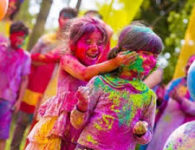
Puran poli ..Gujia .. Thandai and the festival of colors

Holi re Holi Purnachi Poli.. up goes the shouts as the Holika Dahan flames touch the sky. You stand near the bon fire soaking in the heat feeling warm and happy inside , praying to the Lord Almighty to burn  away the sorrows , despair , poverty and all things negative and bless us with health , wealth, happiness and prosperity.


Its that time of the year when winter is ending and Summer is about to start , that’s when our ancestors created a festival to usher in the Summer .  Holi comes at a time of the year when people have a tendency to feel sleepy and lazy. This is natural for the body to experiences some tardiness due to the change from the cold to the heat in the atmosphere. To counteract this tardiness of the body, people sing loudly or even speak loudly. Their movements are brisk and their music is loud. All of this helps to rejuvenate the system of the human body.
Besides, the colours when sprayed on the body have a great impact on it. Biologists believe the liquid dye or Abeer penetrates the body and enters into the pores. It has the effect of strengthening the ions in the body and adds health and beauty to it.
There is yet another scientific reason for celebrating the Holi, this however pertains to the tradition of Holika Dahan. The mutation period of winter and spring, induces the growth of bacteria in the atmosphere as well as in the body. When Holika is burnt, temperature rises to about 145 degrees Fahrenhiet. Following the tradition when people perform Parikrima (circumlocution or going around) around the fire, the heat from the fire kills the bacteria in the body thus, cleansing it.
The way Holi is celebrated in south, the festival also promotes good health. For, the day after the burning of Holika people put ash (Vibhuti) on their forehead and they would mix Chandan (sandal paste) with the young leaves and flowers of the Mango tree and consume it to promote good health.

Some also believe that play with colours help to promote good health as colours are said to have great impact on our body and our health. Western-Physicians and doctors believe that for a healthy body, colours too have an important place besides the other vital elements. Deficiency of a particular colour in our body causes ailment, which can be cured only after supplementing the body with that particular colour.

All this is great but the best part of celebrating Holi and Duleti ( Dhulivandan ) is sweets and other nick nack you can savor and hogg on. Leading the way is Puran Poli a Maharashtrian delicacy without which you can not imagine Holi being complete. A soft and flaky roti made of Maida (kanik) stuffed with Puran made of chana dal and jaggery spiked with cardamom(velchi / elaichi) and nutmeg (jaifal) to give it that extra flavor. Eat it hot and pipping smeared with a generous trikle of pure desi ghee . Or try it like I do by dipping its pieces in milk and then finally smack your lips and  give a hearty burp to acknowledge the host / puran poli maker of the pure joy and satisfaction you had enjoying the sweet meal . Every year all of us gather at my mom-in-laws place on Holi and after celebrating the Holi Dahan in the society compound devour the scrumptious and best ever Puran Poli made by my mom-in-law Namrata Desai – Mummy ,made with her secret recipe which includes a dash of extra special ingredient of love and care.

Another favourite Holi recipe is the Gujiya a classic North Indian sweet among Holi special dishes. In the festive season of holi eating gujiya is a tradition.It is made in most part of India and has different names like Karanji and Ghugre. The filling of gujiya is a mixture of roasted dry coconut, nuts, mawa, cardamom powder and powdered sugar. It can be glazed with sugar syrup. To coat or not to coat gujiya in sugar syrup is an option. Bite into this sweet snack and let it melt in your mouth.


For Goans / Karwari like me Holi is very special and a unique sweet associated with Holi is the Mangane .A sweet dish made from Chana dal cooked with jaggery and coconut milk ,added with Ole (Wet ) Kaju and Kismis (Raisin) to produce this famous wholesome dessert.It can be had with hot and fluffly puri’s or simply devoured like a kheer.


Still remember this sweet dish made by my mother in a special round bottom utensil slowly cooked on a low flame and kept on a simmer for a  long time to get the perfect taste which still lingers on my tongue..

But if you are not the sweet eater types you can always enjoy the good old bhajia or crispy pakora made from onion or potato . Or the all time favourite namkeen the Samosa . And where else can you satisfy your taste-buds but the famous A1 Samosa of Gurukripa’s at Sion . 


Fried to perfection of golden brown with its special potato mix stuffing not too spicy not too salty but just right that even the kids and adults love its taste and if its served with chole or mint chutney toh kya kehne..


And how can you forget the Thandai to quench ones thirst after eating all these oily and fried namkeens and sweets. This Holi’s official drink is mainly found in Rajasthan and the north of India. But now a days also available in pre-mix bottles . The most famous being Guruji’d Thandai.Thandai is a very popular drink made with almonds, saffron, milk, sugar and a variety of herbs. It’s also possible to find a version made with bhaang for the extra effect. But mind you it can get you into a tipsy situation which not even the hardest of liquor can match. People drinking this concoction of Cannibis (bhang) combined with milk, refined butter, mango and spices are know to get into a state of psychotropic liberation that makes them emotional and express themselves in loud manner.So I would suggest caution if you are thinking or getting a kick this Holi.

And finally after eating all these sweets I hope it will definitely make you a happy person if not a sweeter person.
So let me pray to God that this Holi bless us all with Happiness and joy and make us a better person for years to come. Happy Holi to all my readers….
Lets enjoy this Holi and Dhulivandan with that famous song from the Blockbuster movie “Sholay” which goes like this ....

Holi ke din dil khil jaate hain
rangon mein rang mil jaate hain
holi ke din dil khil jaate hain
rangon mein rang mil jaate hain
gile shikwe bhool ke doston
dushman bhi gale mil jaate hain
Holi Hai…….


Saturday, March 2, 2019

Just Walking Around


Just Walking Around

Trams Tam-Tams & Pilots …Unconventional modes to commute

Ask any young guy or girl or Melenials as they are known,how they commute in the city and pat comes the reply “ Take out the mobile open the Uber / Ola app put the destination check the wait time for the cab and book it . Simple” And if you ask who pays for it answers is simple “ Dad’s Credit card is already configured” .What about when these aggregator cabs were off the raod during the several strikes few months back. And the answer would Oh then “Kaali Peeli hain Uncle” . Wow that’s great I say. Ask them if they ever travelled in the BEST bus or the local train few of them laugh at you for such a sinful suggestion. They will say “Kaun jayega us bheed mein” or “Uncle AC kahan hai usme”.I laugh at my own advice and shake my head in despair. We as parents are to be blamed for not making our kids bold enough to take the public transport. The transport we as kids used to travel across the length and breadth of our Mumbai city.

So the following weekend which was the Republic Day long weekend when we had decided to head to Alibaug for a short RnR vacation I decided to try out our public transport and teach my elder daughter Netra how to use the fastest means of travel to reach a place in Mumbai. Since she had school on Jan 25th as also oral exams scheduled we could not allow her to bunk school. So rest of the family members my wife my little one Bhakti alongwith extended family members went ahead in the afternoon taking the Gateway to Mandwa jetty launch (boat ) service. Me and Netra had to reach Gateway once she came home from school around 6:45pm well in time to take the last launch at 8pm. Once she was ready I said lets take the train to CSMT (good old VT station)  rather than a Kali Peeli or Uber so we can reach early. 


And I was correct it took us exactly 20 minutes to reach CSMT station. Then from just outside the station we took the cities landmark Red bus from BEST to reach Chatrapati Shivaji Maharaj Museum near Regal Cinema and onward we marched to Gateway on foot to reach at exactly 7.35 well before the last launch would depart at 8pm. Being a long weekend there a huge line of at least 50-60 people already waiting there. We joined the serpentine line and Netra took a food break of sandwich and Frooti back in her backpack. We spent some time enjoying the great view of the floodlit Gateway standing tall against the rough sea in the background and the chilly wind swirling around.


 After waiting for sometime and with the que not moving we got uneasy, and then the Police van came announcing the unfortunate news . The launches which had gone to Alibaug in the evening had not returned due to the rough sea. As a result the further services stand cancelled. Both of us were crest fallen. All this rushing for nothing. We decided to give it one last shot to try to reach Alibaug. I said lets try to get to Mumbai Central Bus depot and take the MSRTC Shivshahi AC bus or in worst case the Lal Dabba. Again we rushed outside to where we could take the Share Cab to Churchgate so as to take the train to Mumbai Central  the best possible way to reach in the fastest possible time. 


Once we reached Churchgate I said let grab some Burgers from Burger King right across the station as did not know how long and when we could eat on the way to Alibaug in a bus if go ahead with the travel.Taking the next train to Mumbai Central , we reached the Bus depot in 15 minutes.


Once there I checked if a bus was available for Alibaug , a bus was present but filled to capacity with not even a space to stand . I then checked with the Bus Stand administrator when was the next bus he said it will be at 12 am . With 5 hour journey to take that bus would have taken us the wee hours of the next day to reach our destination. Dejected I decided that it was better we call it off for the night and catch the 1st launch the next morning at 6am. I could see the dis-appointment in Netra’s eyes but she understood that it was a good decision. On the way home I asked her how was her experience of travelling by these mode of transports and she was enthused to travel more . We took a cab back home reaching home for a late dinner of Whopper Burgers and Fries and retired for the night with hope in our minds of making it early the next morning.


Next day we got up real early and reached Gateway of India again , this time the line was short and it moved swiftly . We took the upper deck of the Ajanta Launch . When it left the jetty we could see the Mumbai skyline light up in yellow glow of the street lamps. The launch moved at an even pace and we enjoyed the gentle breeze on the deck , it was still little before Dawn with Sun still below the horizon and the darkness engulfing the sea ahead. In just a few minutes though the entire scene chaged with the Sun rising and the sky turning the shade of red and then slowly the sky getting bright. A gaggle of Seagulls hovering close to the launch and the few passengers on the deck giving them bread crumbs or wafers to get them to come closer for some selfie moments. We reached Mandwa in an hour and 10 minutes that was around 7.15 am. Next we had to reach the Hotel at Chondi as we walked down the road outside we found a odd looking yellow coloured rickshaws locally called Tam-Tams. A 7 seater with 2 parallel bench behind the driver to seat 6 and one could sit next to the driver on the front extended seat. I have seen these Tam-tams all across Maharashtra be it in Raigad , Pune or even in the western Maharashtra belt while travelling for work. Most often than not the driver takes 8-10 passengers during a shared ride to make the most of the trip in monetary terms.


We reached the Hotel in time for a hearty breakfast of Poha and garam chai and some sugar dripping jalebi’s and some rava cake coursey my Wifey and my Brother-in law Naazim. It was a great experience using some of the unconventional modes of vehicles to reach our destination.

But if you travel across the vast country as India you are bound to come across much more of such unconventional means. Take for example the city of Mathura , when I was stationed there for a Software project for IOCL refinery we were put up in a 2 storied Kothi near the city center and the only means to travel to the refinery were the Phat-Paht’s used by the locals as share-a-ride option. The most iconic bikes of the Second World War era became a mode of public transport in the North of India. Imagine a Harley Davidson bike accommodating 10 people. Well, that’s what a little “Indian Jugaad” (innovation) can do. Popularly called as Phat-Phat because of the bike’s loud exhaust sound. Phat-Phat is modelled from Harley Davidson’s WLA motorcycles, which were manufactured during the Second World War. In the years leading to the War, Harley Davidson Motorcycle Company was unionized and received a contract to manufacture a variant of the civilian bike for the United States Army. During the Second World War, the WLA motorcycle symbolized reliability and was used in massive numbers. However, with the advancement of communication technology post Second World War, these bikes became redundant for military use.


In the US and Europe, most of them were sold as surplus. Sold cheaply, these bikes led to the rise of the ‘chopper’ and ‘biker’ culture, where they were modified. In India, the Harley-Davidson WLA got a fancy new avatar and a new lease of life. It was transformed into a public transport vehicle rambling on crowded Delhi streets, ferrying daily passengers across the city.

The motorcycles front part and the engine was attached to a bright rear passenger-carrier covered with an umbrella, often painted in some bright hues.


Somewhere along the journey, the Phat-Phat was redesigned to seat six to eight passengers. In reality though, these were seen ferrying at least ten passengers. If circumstances and size permitted, the enterprising drivers would have two more passengers sharing their own seat.

Across the river from Mathura is the Temple town of Vrindavan a sleepy little place with small bylanes for streets but a sacred place for Hindus due its importance as the town where Lord Krishna grew up and many a temples built to honour the great lord of pure love . On one of the off days I and my colleague ventured out to see the beautiful temple of Banke Bihari right in the heart of Vridavan. To reach there we took the Phat Phat from Mathura upto the main chowk of Vrindavan and then asked some locals for direction to reach the old heritage temple. We were told the best option would be to take the cycle rickshaw 


.So we hopped on to one and asked the rickshaw puller to takes to the temple. And rightly so the bylanes were so narrow that  it could accommodate these cycle rickshaws and may be a person walking besides them. On reaching the temple we soaked in the sights and sounds of the centuries old wooden pillared temple with the most beautiful and innocent looking Banke Bihari  Krishna. As we entered the temple premise we could see the pillars and roof smeared with bright pink Gulal . When we asked ablut the same we were told that the temple plays host to the Colourful Holi festivities for 5 days when the locals and tourist alike enjoy playing with Abhir and Gulal like the Lord himself did with his fellow friends , gopikas and his devotees . We had reached during the evening Aarti time and so stayed back to experience the once in a life time spiritual experience. As the Aarti ended loud shouts of Hathi Ghoda Palki Jai Kanhaiya Lal ki and Banke Bihari Lal ki Jai went up in the air .


When I travelled futher east to Kolkatta I could see even more options of travel. Besides the State transport buses  there were the big fat & completely yellow old Ambasador cars turned into taxis. Travelling in them brough back memories of childhood when I used to travel in my maternal Uncles prestine white Ambasador Mark IV with its spacious rear seat which was more like a sofa seat . Even the front seat was a sofa seat as the gear being part of the Steering wheel giving enough space for the co-passengers sitting next to the driver. 


You can also travel the city streets on Cycle rickshaws and till a few years back you had the Human rickshaw pullers who would pull and run taking the heavy load of their Bhadralok’s. 


These hand pulled rickshaws are banned by the honorable Supreme Court and by law as it took into consideration the plight of rickshaw pullers and their inhuman conditions of their bleeding feet on tar / concrete roads and most pullers suffering from an eventual TB related death due to poverty and malnutrition on the meager wages they earned from their trade.

Moving around in Kolkotta is cheap though as you can still hop on to a running tram chugging gently on the roads taking the passengers from point to another. These relics of the past are very environment friendly as they run on electric cable which runs like a spiders web all across the older parts of the city. Trams are known to be fun to ride with its mild speed and old world charm.


Did you know even Mumbai had a network of tram lines and station well into the late 1960’s. the idea of mass transport system in Mumbai was originally proposed by an American company in the 1860’s. Envisioning a horse drawn tramway system , the American company proposed a system that would connect Pydhoni ( Central Mumbai) with Colaba (the southern tip of the city). At the time during the American Civil War, Mumbai had advanced as a global exporter of raw cotton to the United States. Unfortunately after the Civil War ended in 1865 Mumbai’s cotton production declined and the entire country fell into an economic depression. Due to the depression the proposed American tramway system was never implemented.

But in 1873 with the permission on the Bombay Municipal Corporation (BMC) , Bombay Tramway Company Ltd (BCLT) the earlier avatar of BEST was licensed to begin perating the horse drawn trams throughout the city. Nearly one year after its establishment the company started operating 2 routes from Pydhoni (Dot #11) to Colaba / Sassoon Dock (Dot #1) and from Bori Bunder (Dot #5) to Pydhoni (Dot #11) . Despite revolutionizing transportation within the city, the initial horse drawn trams were not popular with the residents in Mumbai because they were perceived as expensive and slow.Due to lack or ridership the company closed down the horse drawn tram system in 1905.


Shortly afterwards in 1907 the Bombay Electric Supply and Tramways Company (BEST) purchased Bombay Tramway company Ltd (BTCL) and began operating the city’s 1st electric tram system. The electric tram system was incredibly popular with the local Bombay residents because of the price and the comfort of the system. Soon the company added additional routes to the tram network introduced Double Decker trams and even began the Red bus service  inspired from the London bus service .The tram and bus network covered the entire city .
In 1964 because of low ridership operating losses and inefficient technology BEST company shut down the nearly 100 year old tram system. The company still continued operations of the city’s bus network which to this day represents an integral part of Mumbai’s transportation system.  


"Kahin Building, Kahin Traame, Kahin Motor, Kahin Mill..." - the vanished trams that the '60s Bollywood hit had immortalized may soon make a comeback, not in their old trundling form, but in a modern avatar.

Recently , while speaking on the coastal road project in Mumbai, Union Minister for Environment Prakash Javadekar announced that trams may be part of the multi-modal corridor planned between Nariman Point and Kandivali.

The draft notification, he said, "mentioned that the metro, buses and trams could be included... The electric tram runs fast. If anything of that sort is incorporated, it will help the people."
May be these old world transportation will add to the charm of the maxim city making traveler and tourist friendly.

Another unique mode of transportation that Uber and Ola are trying to start is the Bike cabs . Since the traffics situation in most metro and big cities getting bad to worse with long taffic jams the latest trend is that people are shifting from cars to bikes . Much easier to zip past and manoeuvre in the traffic . They have been doing pilots in cities like Pune and Ahmedabad where the response has been great. But there is one state where Bike taxis have been part of the roadscape since last 30 years is Goa. There they are known as Pilot . Painted black and yellow like auto-rickshaws or taxis, these two-wheeler motorcycle pilots are found waiting for passengers in almost all towns, cities and even villages, along 1200 km of major and minor arteries of Goa. The unique system of motorcycle pilots started during the Portuguese rule in Goa. It was later recognized by the Indian government and the Motor Vehicle Act in 1979.


Today, it’s a well-regulated business carried out under the watchful eye of the State as well as a code of conduct willingly formulated by the Pilot’s Association.
Struggling with a handful of papers and files or carrying luggage? Need to rush to work or have an urgent appointment in court, a government office or an interview? Late for school or college? Motorcycle pilots swoop in to rescue you from distress.

They ferry the day’s newspapers to the remotest village before you wake up. Take you to visit relatives untraceable on Google maps. Hired to drop tiny kids to Kindergarten, young girls and married women rely on them to reach their destinations safely. You would not come across any eve-teasers, street fighters, hirelings or drunkards among pilots as they go strictly either by self-discipline or their own code of conduct. They even censure or reprimand each other for any misbehavior.

A motorcycle pilot is also considered ‘a trusted neighbor, guide, helper in good times or bad and a trustworthy friend’. Staying far away from all forms of rash riding even if their clients coax them to. There are a negligible amount of rash riding incidents involving motorcycle pilots in Goa.

So if you are an avid traveler or even the regular commuter do go beyond the app based aggregator cabs and experience the charm on any city / place you visit by travelling in the local mode of transport. You will experience the trill and adventure associated with the place and also be able to catch the sights and sounds which you are sure to miss in the AC enclosed environment of the Uber / Ola cab..

Have fun , travel wide , stay safe and experience the thrill.. Happy journies and make some happy memories..